Motion Control Systems Explained: Precision Automation for Manufacturing Lines
Modern manufacturing depends heavily on precision, speed, and repeatability. One of the most critical technologies enabling this level of performance is motion control. In advanced production environments, especially in Singapore’s high-value manufacturing sector, motion control system singapore solutions are widely used to ensure accurate positioning, synchronized movement, and high-speed automation across production lines.
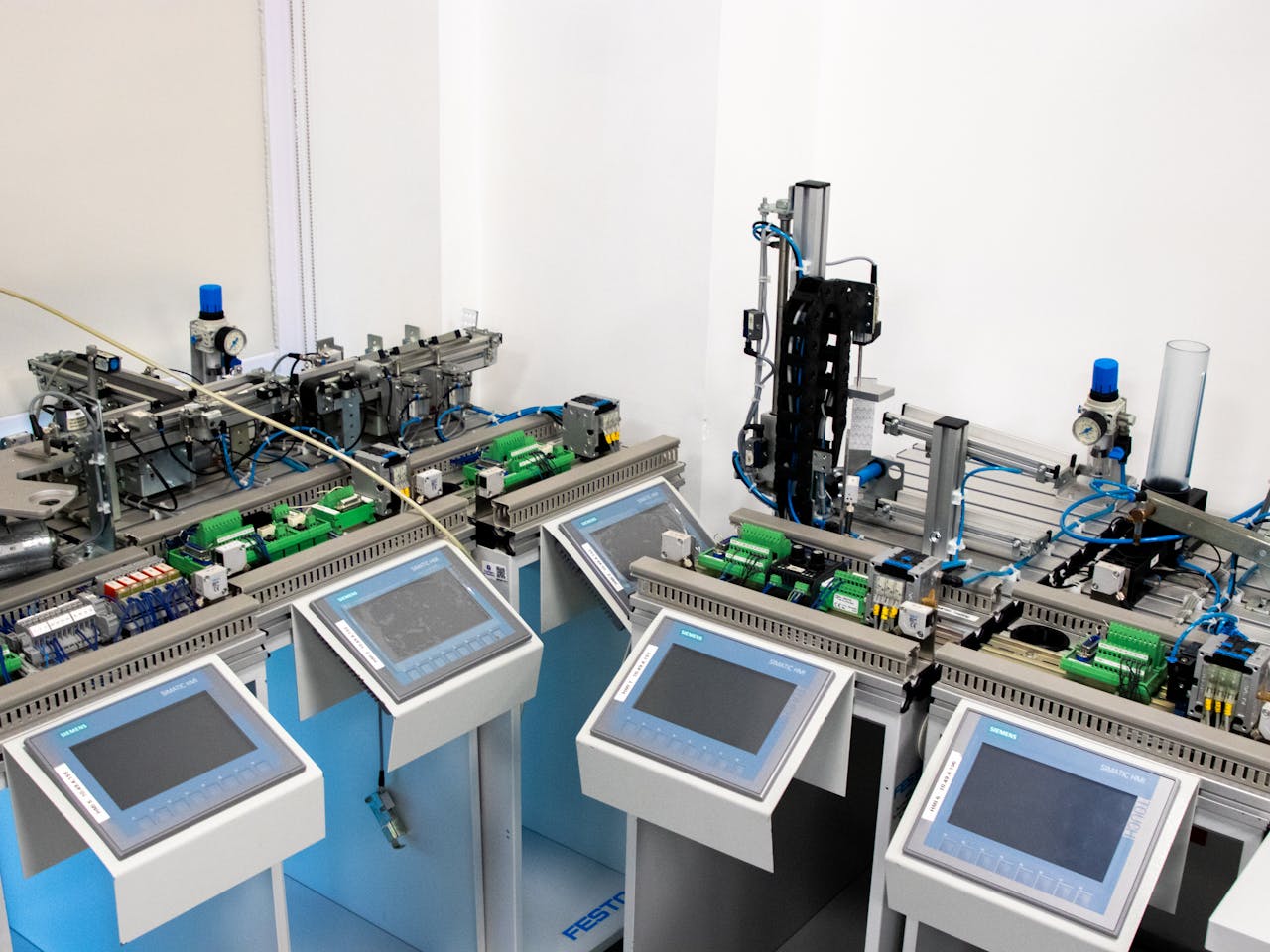
Table of Contents
- What is a Motion Control System?
- Why Motion Control is Important in Manufacturing
- Core Components of Motion Control Systems
- Types of Motion Control Systems
- How Motion Control Works with PLC Systems
- Servo Motors and Drives Explained
- Precision and Accuracy in Automation
- Applications in Modern Manufacturing
- Motion Control in Robotics Integration
- Industrial IoT and Smart Motion Systems
- Challenges in Motion Control Implementation
- Future of Motion Control in Industry 4.0
- Conclusion
What is a Motion Control System?
A motion control system is a type of automation technology that controls the movement of machines, equipment, and mechanical components with high precision. These systems regulate speed, position, torque, and synchronization of motors and actuators.
Motion control is essential in applications where accuracy and repeatability are critical, such as semiconductor manufacturing, robotics, packaging, and CNC machining.
Why Motion Control is Important in Manufacturing
In modern factories, efficiency alone is not enough. Manufacturers also require precision and consistency. Motion control systems ensure that machines move exactly as programmed, reducing errors and improving product quality.
In Singapore, where industries demand high precision and low defect rates, motion control plays a key role in maintaining global competitiveness.
Core Components of Motion Control Systems
A typical motion control system consists of several key components working together:
- Motion Controller: The brain that processes movement commands
- Servo Drives: Convert control signals into motor power
- Servo Motors: Execute precise mechanical movement
- Feedback Devices: Encoders and sensors for accuracy correction
- Control Software: Used for programming and system configuration
Types of Motion Control Systems
Motion control systems can be classified into different types depending on application needs:
- Open Loop Systems: Operate without feedback control
- Closed Loop Systems: Use feedback for high accuracy control
- Servo Systems: High-precision control using feedback loops
- Stepper Systems: Simple and cost-effective positioning control
How Motion Control Works with PLC Systems
Motion control systems are often integrated with PLCs to coordinate machine operations. The PLC sends commands to the motion controller, which then controls motor movement based on programmed logic.
This integration ensures synchronization between multiple machines in a production line, improving efficiency and reducing errors.
Servo Motors and Drives Explained
Servo motors are a key component of motion control systems. They provide precise control of angular or linear position, velocity, and acceleration.
Servo drives regulate power delivery to the motor based on feedback signals, ensuring accurate movement and stability.
Precision and Accuracy in Automation
Motion control systems enable micrometer-level precision in industrial applications. This is essential in industries such as electronics manufacturing, semiconductor production, and medical device assembly.
High precision reduces waste, improves quality, and ensures consistent production results.
Applications in Modern Manufacturing
Motion control systems are widely used across many industries:
- CNC machining and metal fabrication
- Packaging and labeling machines
- Robotic assembly systems
- Semiconductor wafer processing
- 3D printing and additive manufacturing
Motion Control in Robotics Integration
Robotics systems rely heavily on motion control to achieve smooth and precise movement. Every robotic arm movement is governed by motion control algorithms that ensure accuracy and repeatability.
In Singapore, robotics integration combined with motion control is widely used in electronics, logistics, and precision engineering industries.
Industrial IoT and Smart Motion Systems
Industrial IoT enhances motion control systems by enabling real-time data collection and remote monitoring. This allows predictive maintenance and performance optimization.
Smart motion systems can automatically adjust parameters based on production conditions, improving efficiency and reducing downtime.
Challenges in Motion Control Implementation
Despite its advantages, implementing motion control systems can be complex. Challenges include system tuning, integration with existing machinery, and the need for skilled engineers.
Proper system design and calibration are critical to achieving optimal performance.
Future of Motion Control in Industry 4.0
The future of motion control is closely linked to Industry 4.0 technologies such as AI, machine learning, and digital twins.
- AI-based motion optimization
- Self-learning control systems
- Cloud-connected motion controllers
- Predictive maintenance for servo systems
Conclusion
Motion control systems are a fundamental part of modern industrial automation. They enable precision, speed, and synchronization across manufacturing processes.
In Singapore’s advanced manufacturing sector, motion control plays a critical role in ensuring high-quality production and global competitiveness.